
Intro
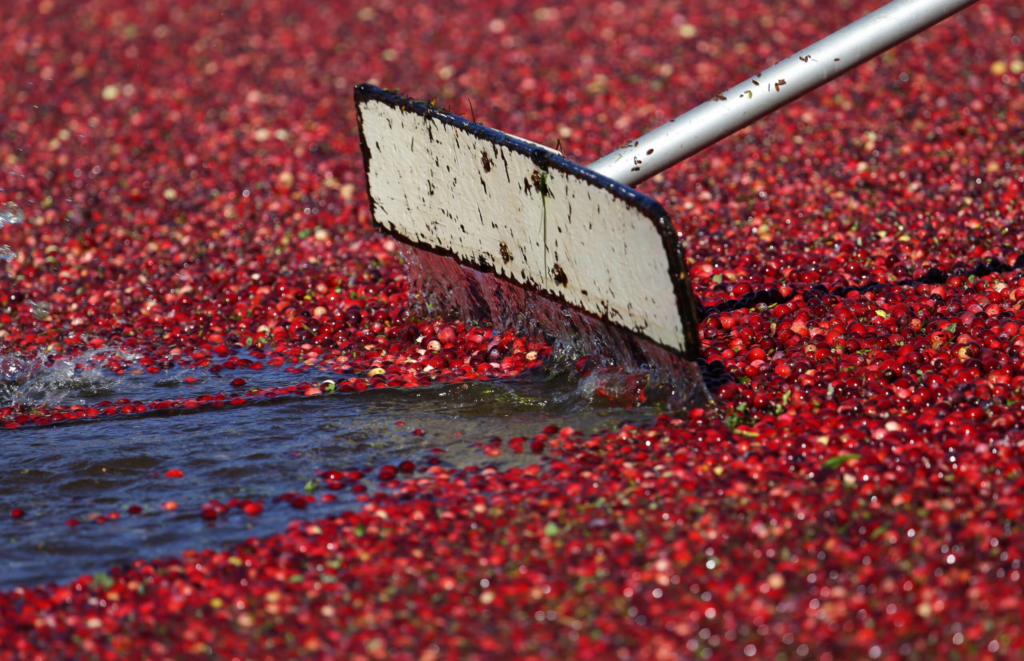
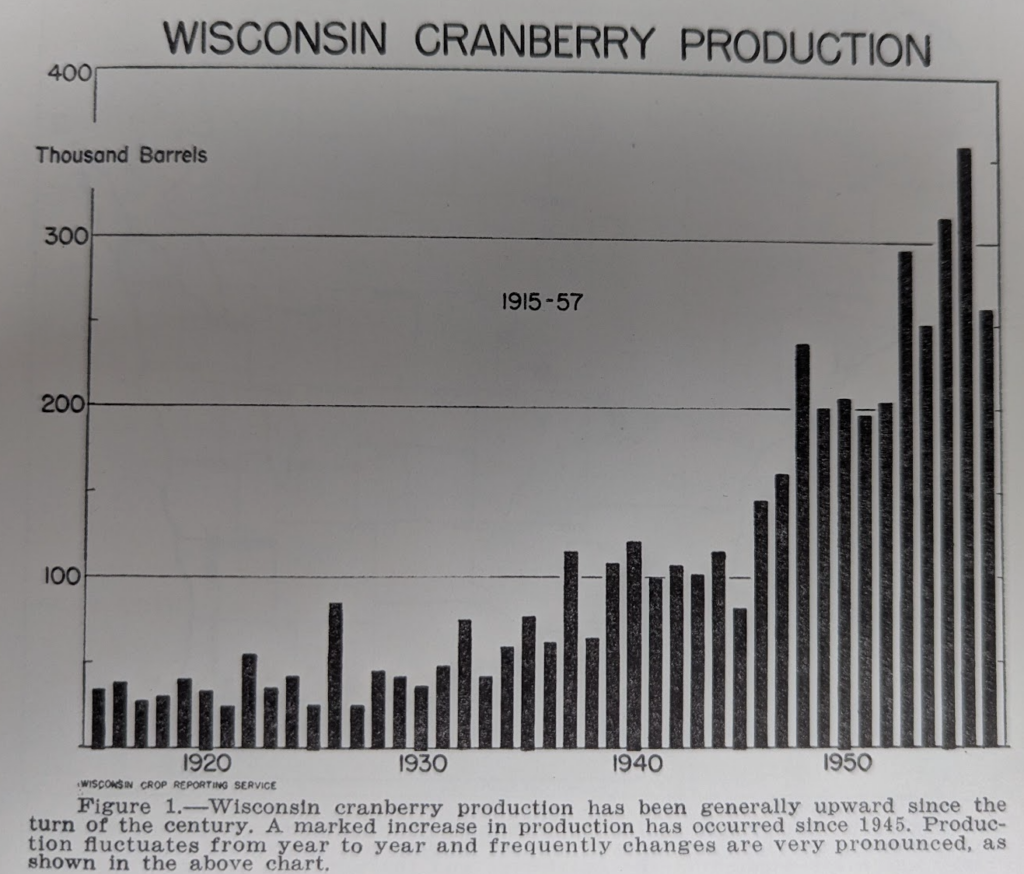
Wisconsin, famously known for its accomplishments as the cheese and dairy state, but for those who are unaware, we are thee lead producer in cranberry production in the US. Producing more than half of the countries supply and more than Massachusetts, Oregon, and New Jersey combined in 2025 cranberry farming has become a prized agriculture in Wisconsin. Starting from just 1,200 acres to about 180,000 harvested acres today, the shift from local farming to commercial production can cause misuse and mismanagement to be overlooked for the efficiency of production. With the change in water and fertilizer usage along with the growing industry, cranberry farms have become major polluter in Wisconsin waters.
History of the Industry
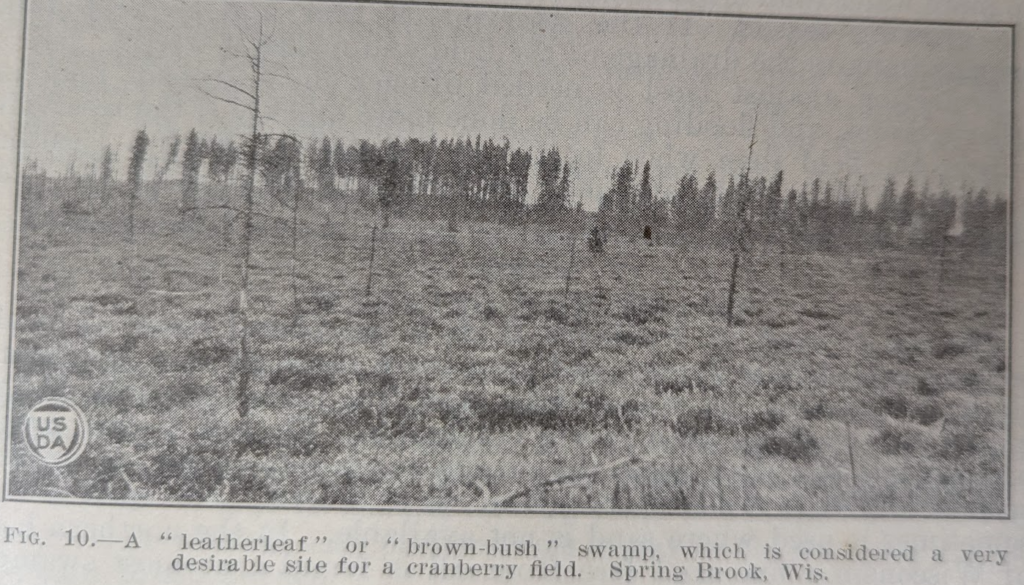
Cranberry farming is a relatively new part to Wisconsin’s agriculture with regulation of farming conditions only starting in 1895. But Wisconsin was the perfect place to expand cranberry operation if the time ever came, especially with it’s “large areas of marsh especially adapted to cranberry culture” (Henry F. Bain)3 Flooding, a commonly used practice today, was only used out of necessity to protect the berries from frost and from insects, as flooding often harmed the berries. It was only till the 20th century that farmers started to use flooding more as people eventually found the reason as to why the berries kept dying. Due to lack of oxygen in the water caused by either the temperature, light, color of the water, or all of the above, effectively drowning the buds. By 1949, 95% of farmers in Wisconsin used flooding and raking as their choice of harvesting. (Vere E. Bufton)4 Not only was flooding beginning to be common practice, but so was the usage of Phosphorus and Nitrogen rich fertilizers. Cranberries as a vine plant best take root in low pH/acidic soils but provide bigger and better fruit if given federalizer
The Effects
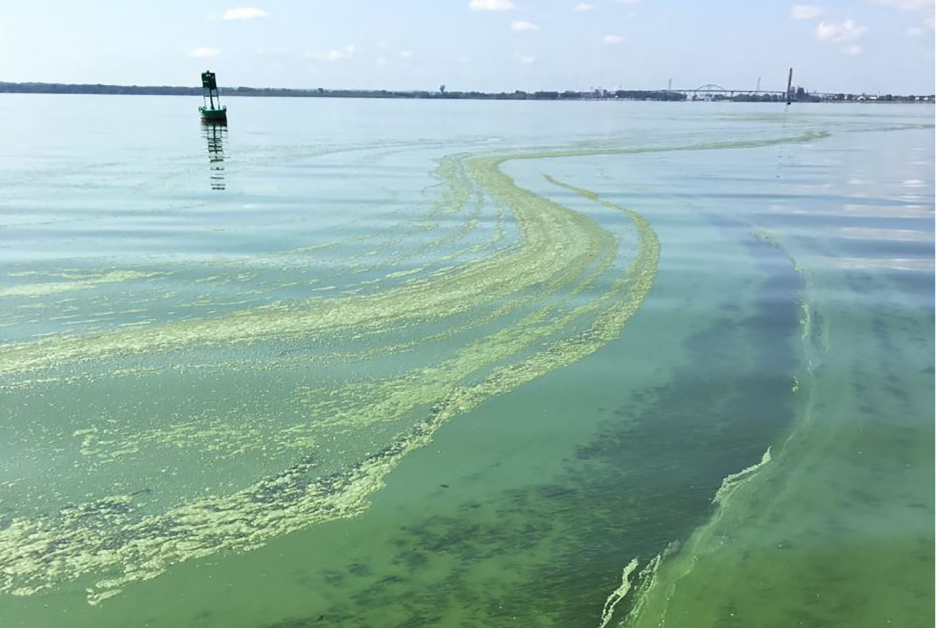
Sadly with the usage of fertilizers and the growth of the Cranberry industry, the concept of more is better followed by the letter. As fertilizer produces a better berry, farms will often overcompensate buy overusing fertilizers; this becomes a problem when farmers must flood the bog. Nitrogen and Phosphorus are found to be the perfect food for algae and with such high amounts, have caused large algae blooms which take up a lot of oxygen in the water creating dead zones. With minimal oxygen in the water fish and other organisms cannot survive and die. As they are considered a non-point source, they therefore cannot be prosecuted for the damage by the Clean Waters Act. Wisconsin legislation also allows under section 94.265 for cranberry farms to use and build any dams or ditches on their land for the purpose of bringing water to flood and divert water out of the cranberry fields, as long as they don’t harm any other dams or ditches
Different Viewpoints
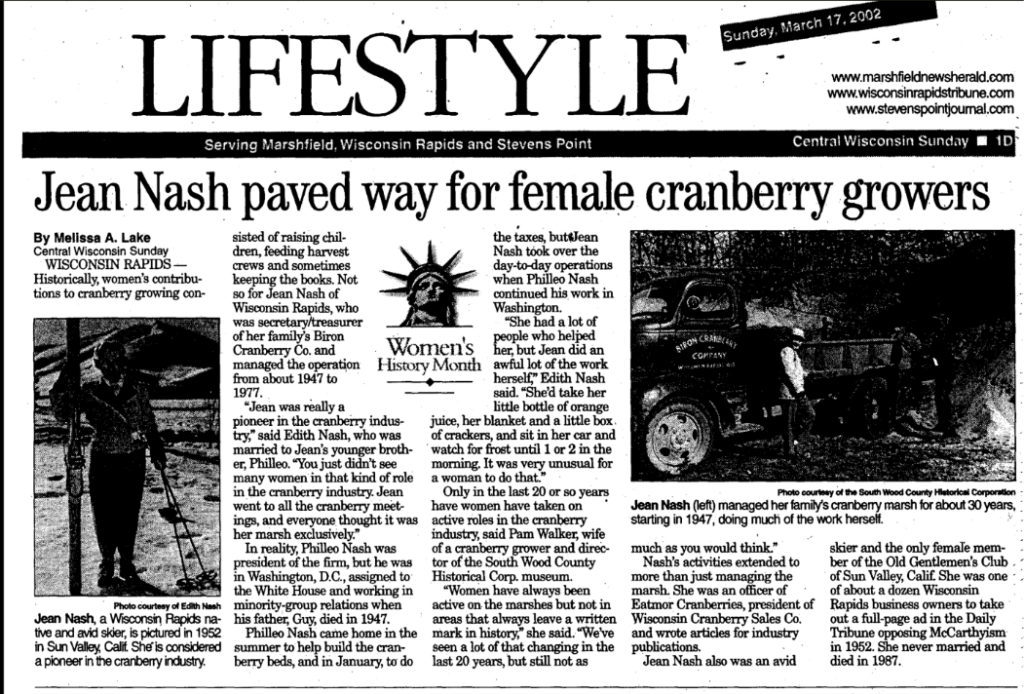
Jean Nash was a local cranberry farmer is Wisconsin Rapids LIFESTYLE and was celebrated in LIFESTYLE Women’s History month issue in 2002. She paved the way for women cranberry farmers in Wisconsin. Practically running her family’s farm herself, her brother and she took over the farm in 1947 when their father died but her brother Philleo Nash, worked in DC and only, “came home in the summer to help build the cranberry beds, and in January, to do the taxes”6 so Jean was left to do the day to day operation. Often the first to rise and last to go to bed Jean ran the Farm for 30 years until 1977 when she retired. She paved the way as women had only just started taking larger roles in cranberry farming in the 80’s. She died in 1987 but was a celebrated member of her community and family, there was nothing to oppose or critique on what she was doing because there was nothing to recognize as wrong throughout her life and her story.
Little can be said in the same regards about the Zawistowsky family. Since the 1980’s the family has been going through multiple lawsuits with the residents of Musky Bay7. A continuous battle from the charge of public nuance to violating the Clean Water Act in their most recent case in 2024 by the Tribe and Lakes Association. The Zawistowski owns two farms by Musky Bay and the Lac Courte Oreilles Band of Lake Superior and are accused of dumping phosphorus laden water into the lakes without a permit. But as Cranberry farms are categorized as non-point sources, the plaintiffs are arguing that they should be categorized as a point source and therefore applicable under the Clean Waters Act. The Zawistowski lawyer stated “We are saddened to once again see actions pitting neighbor against neighbor and bringing emotional stress and hardship to these growers and their families”8 We see both sides of the story here with the Farm acknowledging what is happening but arguing about the technicality of the law, and the plaintiffs who argue from the viewpoint of preservation of those community waters.
Conclusion
The Cranberry industry in Wisconsin demonstrates the cost of agricultural success and the lack of regulation, with our environment on the line. What started from a small local practice of already flourishing marshes grew into a highly industrialized system relying on heavy fertilization and water for efficient production. Without acknowledging the changes of the industry, we completely disregard the other side to the story. Just looking at the issues from the perspective of scientists, environmentalists, or communities, we see farmers who act innocent and disregard the impact they have around them. Looking at Wisconsin farmers, we see a gradual rise in an expanding industry here. Farmers experiencing a completely different plant and learning how to tend, care, and harvest this berry in a way that hasn’t been done before in Wisconsin. Farmers have followed the flow of learning with this stubborn plant, and sadly, that has led to some practices that have negative effects. To fix these problems, we must first acknowledge the changes that have caused them, only then can we look to what can be done.
Sources
- Wakefield, Helen. “Cranberry Production Forecast to Land near Five-Year Average in 2025.” Cranberry production forecast to land near five-year average in 2025 | Economic Research Service, November 26, 2025. https://www.ers.usda.gov/data-products/charts-of-note/chart-detail?chartId=113512.
- Cranberries in Wisconsin. Wisconsin Rapids, WI: Wisconsin State Cranberry Growers Association, n.d.
- Henery F. Bain, Cranberry Industry in Wisconsin, Bulletin No.96, Wisconsin Department of Agriculture, 1929
- Vere E. Bufton, Cranberries of Wisconsin, Special Bulletin No.70, December 1957
- Wisconsin Act 492, Sec 94.26 (1994) https://docs.legis.wisconsin.gov/statutes/statutes/94/26
- Lake, Melissa A. “Jean Nash Paved Way for Female Cranberry Growers.” LIFESTYLE. March 17, 2002, sec. Central Wisconsin Sunday.
- State v. Zawistowski, 290 NW 2d 303 – Wis: Supreme Court (1980)
- Kaeding, Danielle. “Tribe and Lakes Association Claim Cranberry Operation Is Violating the Clean Water Act.” WPR, March 15, 2024. https://www.wpr.org/news/tribe-and-lakes-association-claim-cranberry-operation-is-violating-the-clean-water-act.
- New Water. An Active Algae Bloom in Lower Green Bay. 17 Sept. 2024. Wisconsin Public Radio, https://www.wpr.org/news/more-people-reporting-harmful-blooms-related-illnesses-on-wisconsin-lakes. Accessed 15 Dec. 2025.
Leave a Reply