(Ambassador 6 et al. 2016)
What is that building?
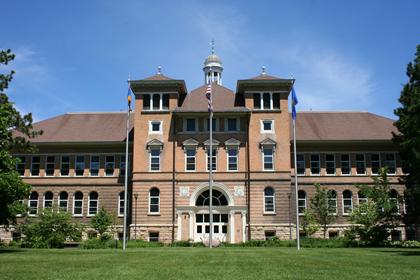
I started my college journey at The University of Wisconsin Stevens Point (UWSP) in 2020, so the first two years I did not go around campus much. When I did get out and walked around campus, I found this building that I had never been in before, and wondered what it was, and why I had never had a class there. I found out that the building is known on campus as “Old Main” and that it is the administrative offices building on campus, so there are no classes to be had within the building.
This information only prompted more questions, as I wanted to know what other purposes the building might have had, how old “Old Main” really was, as well as why and how the building has been around for so long.
The Building’s Purpose
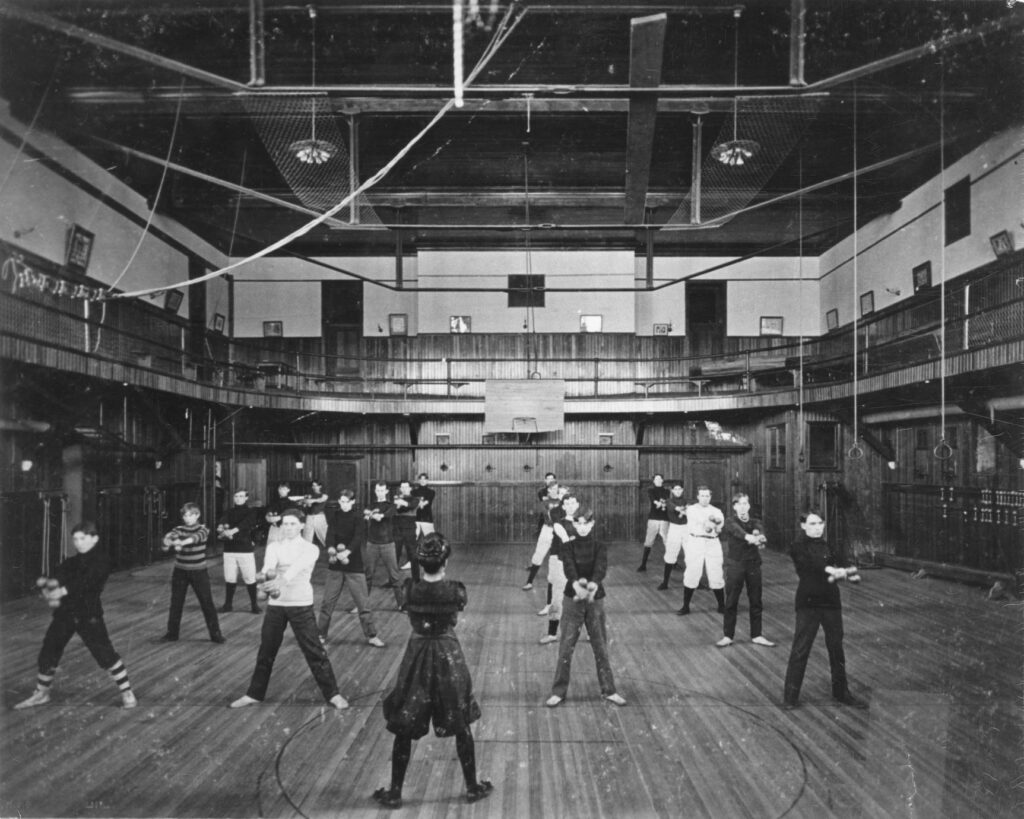
After doing some research on the subject through histories of the university and even the building specifically, I found out that the original purpose of the building in 1894 was to be the sixth Normal school in the state, which were schools that were meant to teach men and women how to teach in public schools (“A History of Old Main” n.d.) Since the building served so many needs in the beginning the layout was different from what can be seen today, one of the most notable differences being that originally the basement and first floor were the gymnasium, leaving the second and third floors for classrooms, administrative offices, and science labs (Paul 1994).
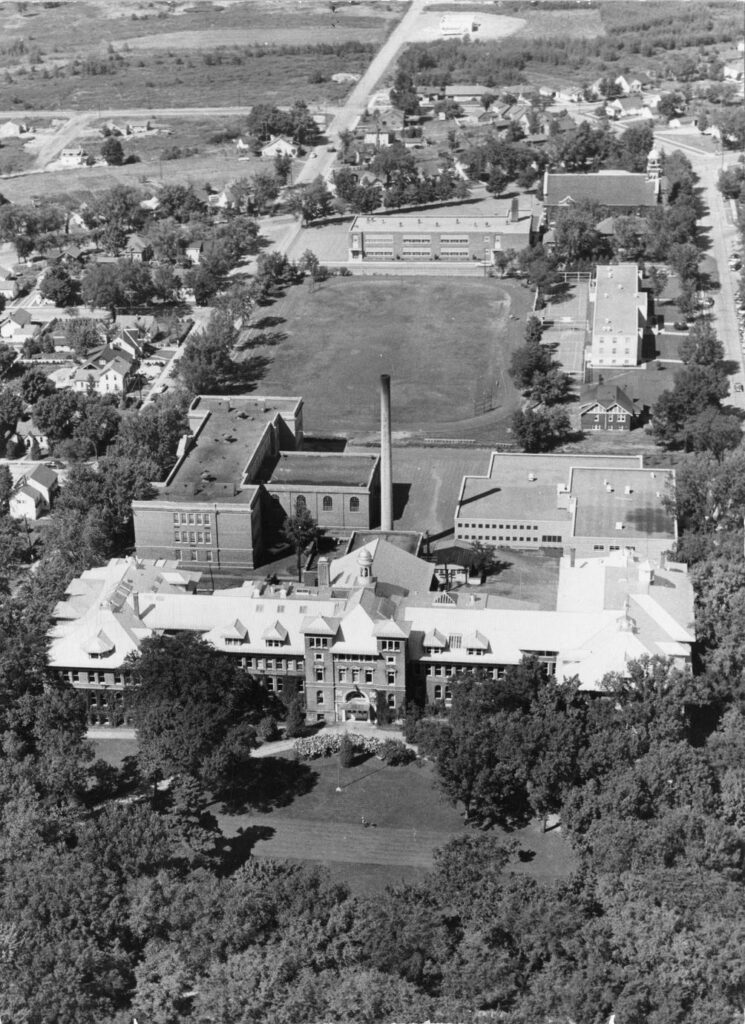
Over the next few years, the school grew in popularity and began to expand the building in order to keep up with the demand for education. A west wing was added to the building in 1901 in order to achieve this goal (Paul 1994).

The trend of growth continued over the years, with an east wing being added to the building in 1914, which was the same year the university started construction on Nelson Hall, which is also still around today (“A History of Old Main” n.d.). Early and into the mid 1900’s were a time of great change for the building, as the basement was re-done three years after the east wing addition, the library was re-done twice in 1924, and 1930 respectively and new heating and lighting fixtures were added in 1954 (“A History of Old Main” n.d.). These renovations culminated in the removal of the gymnasium from the building and more classrooms in its place as well as a new library.
Danger Strikes
The story of growth for “Old Main” stops around the 1960s and 70s, as by this time the third floor of the building had been closed off for safety reasons. After that the Wisconsin State Building Commission and the Bureau of Facilities Management declared the building obsolete and a safety hazard. The funds to demolish the buildings had been put forth.
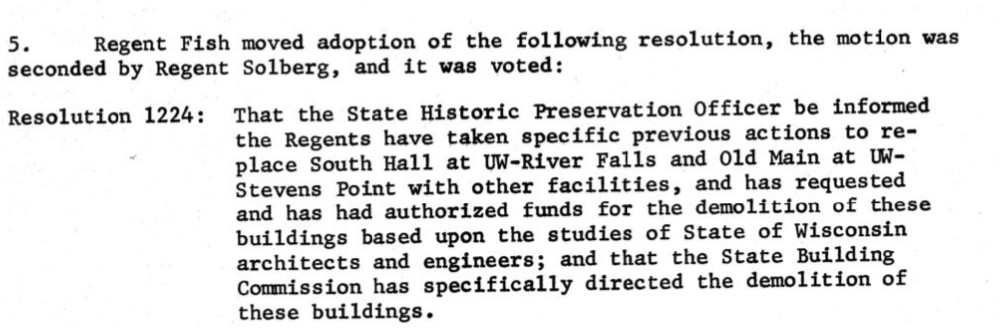
(“John Weaver (1971-1977): Minutes of the University of Wisconsin System Board of Regents (80 Documents) – Full View – UWDC – UW-Madison Libraries” n.d.)
While this could have been the end of “Old Main’s” story, the administration at UWSP, and in particular the Chancellor at the time Mr. Lee Sherman Dreyfus (Who’s name may sound familiar to those on campus as it is the D in DUC).

(“John Weaver (1971-1977): Minutes of the University of Wisconsin System Board of Regents (80 Documents) – Full View – UWDC – UW-Madison Libraries” n.d.)
The same year the building was decided to be saved was the same year the building was added to the Register of National Historic Places (“A History of Old Main” n.d.).
Context/Why this matters
While this story may have been interesting to read to some, others may ask what the point is, or why this building being around for 127 years matters. This brings me to the topic of preservation, within the US, the historic preservation movement nationally is very young, with the National Historic Preservation Act being enacted in 1966, which really only listed buildings to not be destroyed in the creation of the highway system unless necessary, although the criteria for “necessary” are not clear.
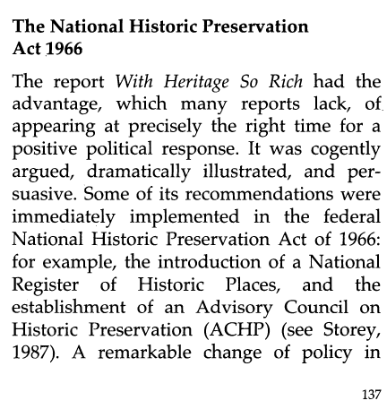
(Cullingworth 1997)
Bearing this in mind, UWSP seems to be right on track with their listing of the building within ten years of the act being passed. While this is true, the complete renovation that came with saving the building meant replacing a lot of original parts, in the end, the Founders Room built in 1980 is the only room that has been preserved as it was. With this being the case, the situation of “Old Main” I think could be more accurately described as historical conservation, as the authenticity is still there, but a majority has been regulated or changed for the benefit of the people who use the building.
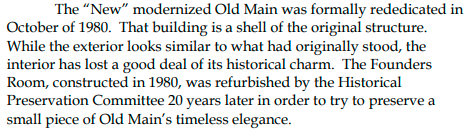
(“A History of Old Main” n.d.).
Leave a Reply