
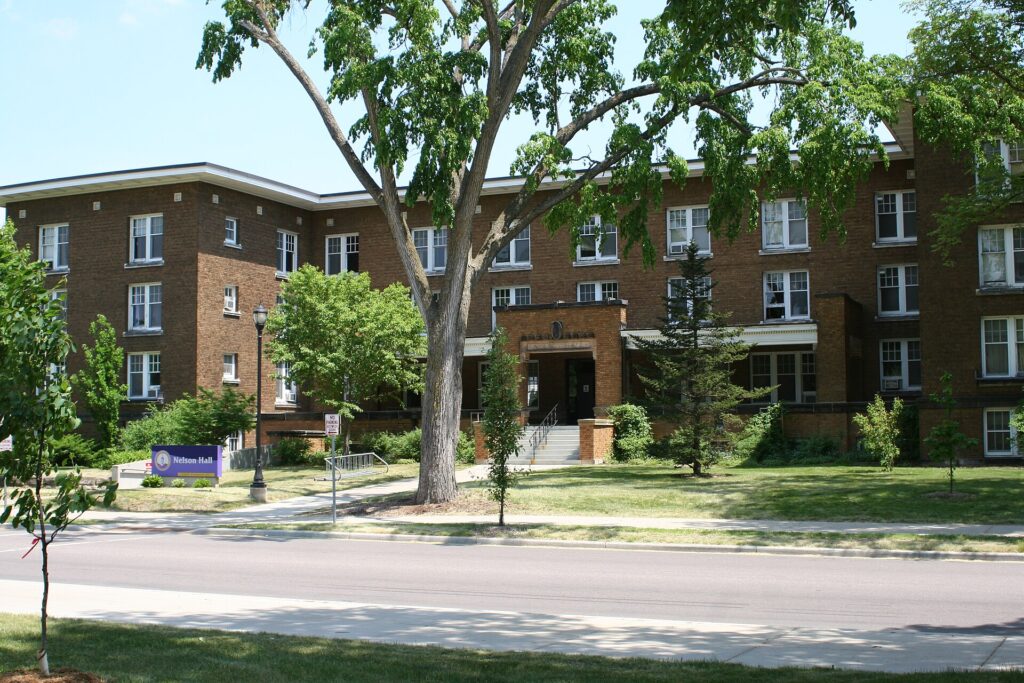
Arnmhs , via Wikimedia Commons

For years, the extent of what I knew about Nelson Hall was that it was old and supposedly haunted. One of those facts is definitely true, the building is over a century old. When researching for UWSP History Club, I made a point to learn everything I could about the buildings haunting rumors since the annual “Haunted History Tour” is held there. I knew about the rumored deaths as well as ghost stories from former residents and employees. Unfortunately, I knew little about the actual history or why so many people fought to preserve it.
Throughout the last century, Nelson Hall has continuously been adapted to meet the ever-changing needs of the university, serving as a woman’s dormitory, military barracks, protest site, office space, and historic landmark. Nelson Hall demonstrates how aging campus buildings become deeply engrained in student memory and university identity, highlighting why preserving buildings is more meaningful than replacing them.
Early History – Construction and Opening
In 1913 state funds were allocated to build a dormitory at one of the Wisconsin’s Normal Schools. Making it only the second Normal School dormitory of its kind in the state. Initially, La Crosse was slated as the preferred location for the project. However, the persistence of university officials led to the dormitory being built in Stevens Point.
Nelson Hall is the second oldest building on campus next to Old Main, which opened in 1894. Nelson came along twenty-one years later, and construction started September 1915, meaning the building is celebrating its 111th birthday this year. The building officially opened on September 15th, 1917. The project cost a reported $100,000, which would equal roughly three million dollars today. The need for a dormitory became crucial as enrollment continued to climb, and boarding became difficult.
Nelson Hall was originally constructed as a woman’s dormitory when the university was still The Wisconsin State Normal School. When the hall opened, 100 women called it home. Ms. Edna Weigler of Menasha was the first woman to move into the building, moving into room 303. May Rowe was chosen to be the first matron of Nelson Hall. The construction of Nelson Hall reflected the growing importance of student life and women’s education during the twentieth century. Rather than simply functioning as housing, the dormitory was designed to create a community and social environment for the female students.
When it opened, Nelson Hall was considered modern and featured a large kitchen and dining area that operated until 1959. The building also housed a specialized laundry room that allowed women enrolled in home economic courses to gain “additional practical experience.” (The Gazette 1917, Pg. 3). In 1917, boarders paid between $3.50 and $4.50 a week to live in the dormitory. The hall had strict rules and regulations for residents, one major rule involving gentleman only being allowed on weekends.
From its inception, Nelson Hall represented more than simply a residence hall. It symbolized the university’s investment in expanding opportunities for students and building the foundation for a stronger campus community.
Use During Wartime
Nelson Hall was business as usual until late September of 1918. Following the United States’ involvement in World War I, Students’ Army Training Corps (S.A.T.C.) was established on campus under the campaign of University President John F. Sims. The S.A.T.C. was created by the federal government to rapidly train college-aged men while they attended school. Seventy young men enrolled in the Stevens Point S.A.T.C. and needed living quarters for residence and training.
In response, the women of Nelson Hall voted 60 to 2 in favor of vacating the dormitory so the building could be used as military barracks. Newspapers at the time praised the women as “patriotic” and “loyal” for their sacrifice. However, this decision left 100 women with only three days to find alternative housing. A public appeal was sent out asking Stevens Point residents to provide temporary rooms for displaced students.
Nelson Halls’ rapid turnaround from women’s hall to barracks demonstrated how campus spaces could be reshaped for national events. The building became one reflection of wartime priorities, showing how universities and students were expected to support the military during periods of international conflict.
The women’s displacement didn’t last long. Following the end of World War I, the S.A.T.C received official orders to demobilize in late 1918. The program was officially disbanded January 1919, despite hopes the S.A.T.C program would remain permeant after the war. Nelson Hall reopened for female residents by the end of December 1918. While temporary, the S.A.T.C. occupation became part of the building’s identity, connecting the structure to a major national event that went far beyond campus.
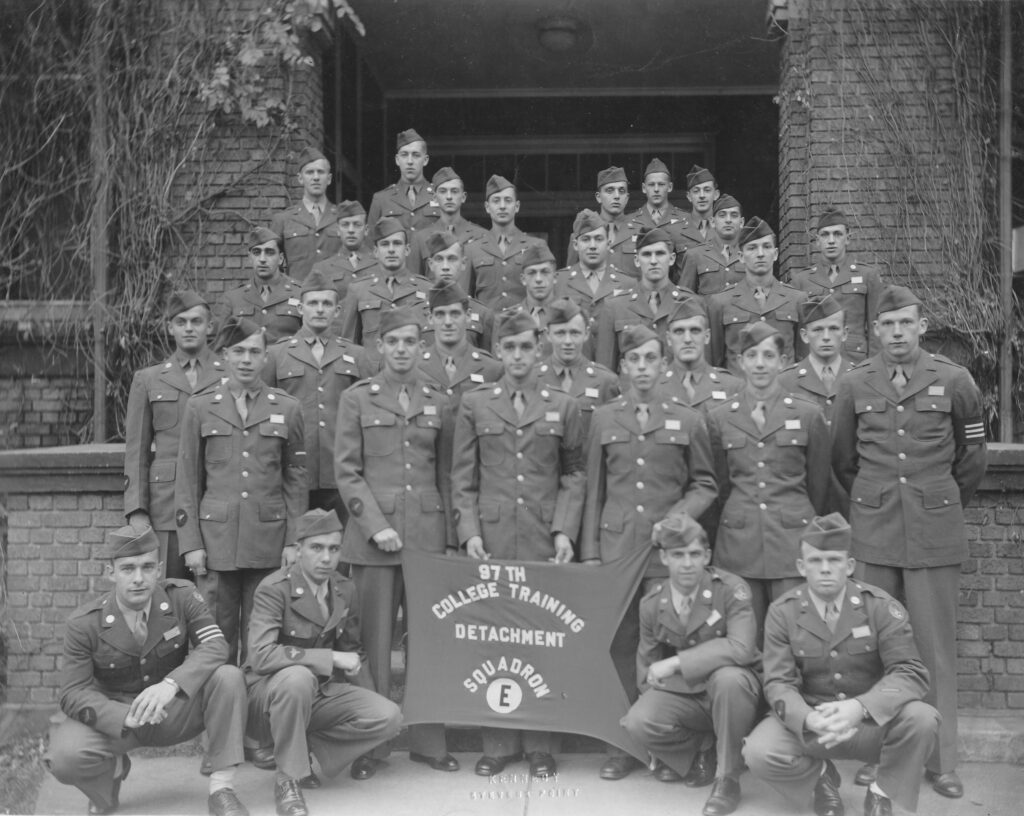
A similar occupation of Nelson Hall was made during World War II when there was a renewed need for men to be trained as soldiers. The Army Air Corps reportedly took over the building from February 1943 to May 1944, and the building housed the 97th College Training Detachment.
Peace and Love
In 1968, Stevens Point approved the implementation of a Reserve Officers’ Training Corps program (ROTC) during the Vietnam War. There was approximately 25 percent freshman class enrollment in the program during the fall of 1968, more popular than initially expected. However, many students strongly opposed what they viewed as the militarization of campus life.
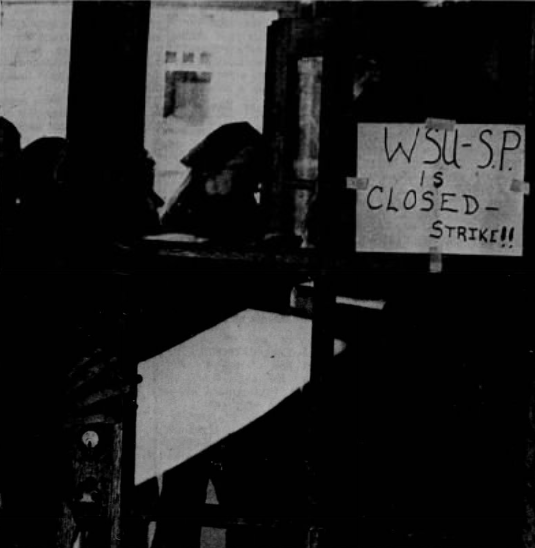
By 1970, Nelson Hall evolved beyond its original purpose of a dormitory and had become a politically charged space on campus because of the controversy surrounding the ROTC. This demonstrates how university buildings take on meanings far beyond their original function, becoming locations where students challenge institutional decisions and express their opinions.
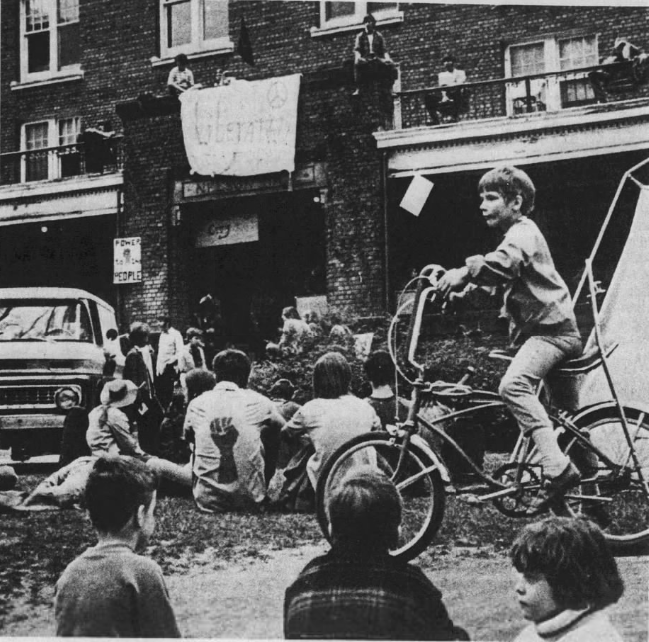
Following the Kent State Massacre on May 4th, 1970, anti-war protests erupted across college campuses worldwide, including Stevens Point. Between 600 to 1000 students marched on Nelson Hall in protest of the Vietnam War and ROTC programs. After the march, students held a candlelight vigil attended by current university president, and future Wisconsin Governor Lee S. Dreyfus.
An issue of The Stevens Point Journal quotes him saying this about the protests:
“What I’m trying to do is let them make their point in any way they see fit as long as there is no violence or destruction.”
During the protests, students organized a sit-in at Nelson Hall where the ROTC offices were then located, preventing classes from taking place. Protesters occupying the building reportedly intended on staying until they were arrested. Although university authorities informed students they were violating campus rules, no moves were made to forcibly remove them. Portage County Sheriff Nick Check described the protests as “generally peaceful.” The only reported acts of vandalism included a small firebomb that scorched the carpeting, ink splattered on the wall, and an upside-down American Flag. Even so, accounts noted that protest leaders worked to calm tension or acts of violence before law enforcement needed to intervene.
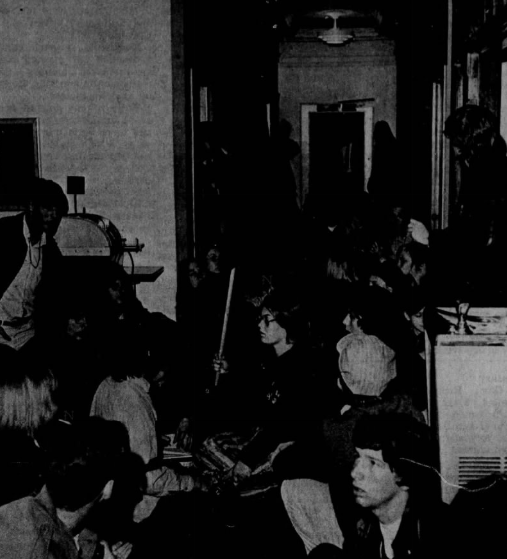
The Nelson Hall sit-in lasted five days before coming to an end the evening of May 10th, 1970. Students concluded the occupation by presenting Dreyfus with a symbolic cardboard key to the building, explaining that it symbolized their belief that the building had “better purposes than ROTC.”
For many students, this symbolic ending gave Nelson Hall a new meaning. It represented the values their university was reflecting. The protests centered at Nelson Hall illustrate how campus buildings often become ties to student memory and in this case, student activism. The dorm was no longer just a physical space, but a symbol for broader debates surrounding war.
An Uncertain Future
1987 was the last year for Nelson Hall as a dormitory. During the late 1980s, the University of Wisconsin system implemented enrollment cutbacks due to limited funding. University officials warned that hundreds of students may need to be denied admission or discouraged from applying. This came in tandem with tougher grading policies in response to 164 Stevens Point students falling behind the university’s expected academic standards.
As campus priorities shifted during the late 1980s, Nelson Hall faced the same threat many historic buildings face, the belief that aging structures were no longer financially practical to preserve. As a result of these cutbacks, the university phased out two dormitories: South Hall and Nelson Hall. Despite the building’s popularity with students, administrators deemed Nelson inefficient to operate.
Following the closure of the dormitory, Nelson Hall became home to a revolving door of campus resources. The building housed student health services, on campus daycares, the Women’s Resource Center, and currently the Sustainability Office. However, the hall hasn’t held any permeant student residents since the late 80s, and the third floor of the building was condemned, still remaining unoccupied.
For decades, debates on the building’s future came down to two possibilities: preserving or demolishing. In 1992, a 3.2-million-dollar refurbishment was approved by the Board of Regents, but the plan was later denied by the state. By 1998 estimates put a full renovation of Nelson Hall costing upwards of four million dollars.
To University administrators, Nelson Hall increasingly represented financial burden and outdated infrastructure rather than a pillar of campus history and identity. To preservation advocates, the building represented a century of campus history that could not be replaced by a parking lot.
In a 1998 issue of the Stevens Point Journal, Assistant Dean Greg Diemer commented on the uncertainty surrounding the building’s future:
“The best opportunity for it (Nelson Hall) is to be converted to the private sector and allow them to restore it…The university needs resources for a lot of things…and many of those priorities we would consider higher than renovating a building. We need money for scholarships…”
By this point, it was known the building had a number of issues. Nelson Hall lacked a functioning elevator, creating accessibility issues. Plumbing and electrical problems continued to worsen. Without financial support, the building’s future appeared bleak.
The Saving Grace
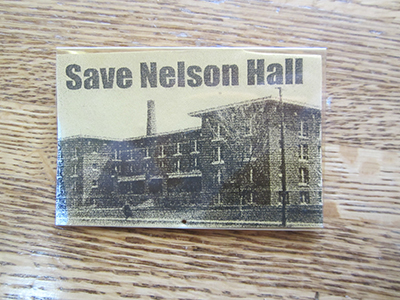
With limited support from the state government, the Department of Administration, and the UW-System, the UWSP Historic Preservation Committee struggled to secure funding to refurbish the building. One of Nelsons strongest advocates was Professor Kathe Julin, head of the Division of Interior Architecture. Beginning as early as 1992, Julin had been researching the buildings’ architecture and historical significance, becoming a major player in preservation efforts. In 1999 she successfully got Nelson Hall classified as an endangered building by the Wisconsin Trust for Historic Preservation, helping prevent Nelson Hall from demolition. In The Pointer, Julin described Nelson as a building that “has such character and is an attractive building,” highlighting Nelson Halls Prairie style architecture that influences its historic value. Preservation supporters argued that Nelson Hall’s value extended beyond just functionality. The building served as a physical reminder of a century of student experiences, memories, activism, and institutional change.
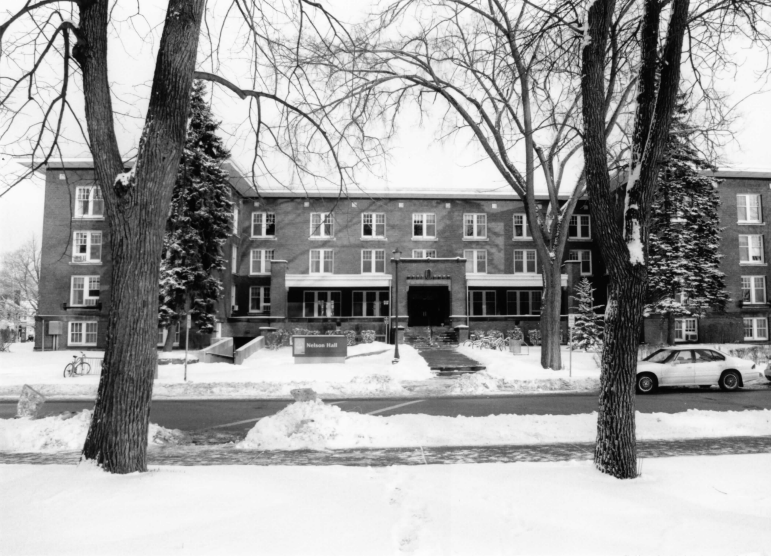
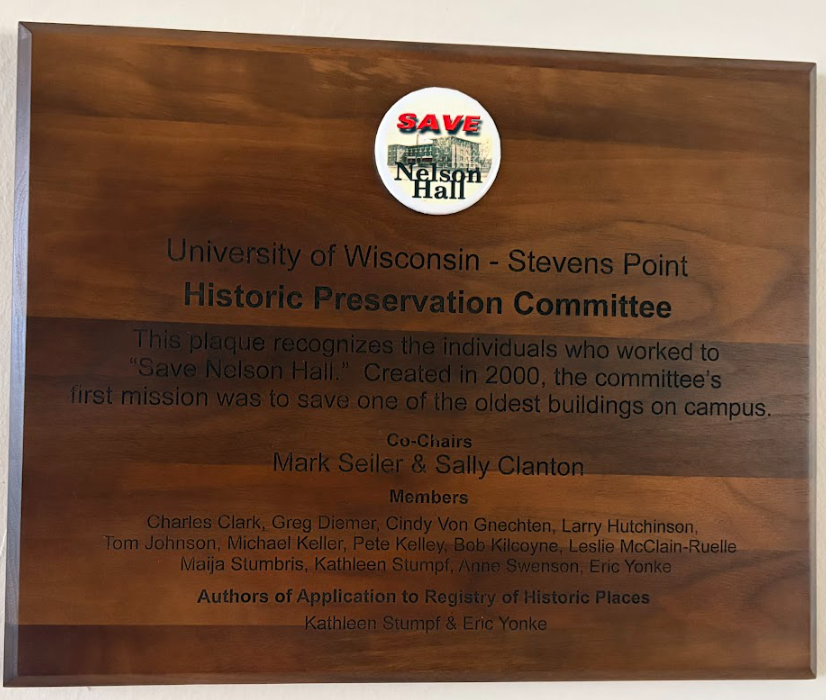
It wasn’t until the 2000s that Julin partnered up with former UWSP history professor Eric Yonke to complete the official application for the historic registry. Their work, alongside the efforts of the University Affairs Historic Preservation Subcommittee, ultimately succeeded. In 2005 Nelson was officially added to both the State and the National Registers of Historic Places. Thanks to the efforts of Julin, Yonke, and preservation advocates, the building was saved from its uncertain future.
Conclusion
Nelson Halls history reflects far more than the story of a single campus building. Over the past 111 years the structure adapted to changing educational needs, wartime demands, political movements, and administrative priorities. Each transformation added another layer of meaning to the building, allowing Nelson Hall to become deeply woven into UWSP’s campus identity.
Although aging buildings are often viewed as inefficient or outdated, Nelson Hall continuously demonstrated why preservation matters. Historic campus buildings provide students with a tangible connection to the past and its stories, conflicts, and experiences. Replacing these historical spaces with modern developments may create convenience, but it also erases physical landmarks that define a campus community.
Today, many students only recognize Nelson Hall for its ghost stories and haunted reputation. Yet its true significance lies not with its spirits, but with the generations of students, faculty, and community members who called it home. Who reshaped the building while fighting to preserve it. Nelson Hall remains a powerful example of how campus spaces evolve over time without losing the history and memories attached to them.
Leave a Reply