
This page will discuss the reactions of UWSP students, educators, or those within the community which had pieces published in the Pointer. The context of these articles that were published in the Pointer describe women’s reactions and responses to events during the 1970s on the liberation movement. The contents of these Pointer articles are highly critical and opinionated of the local and federal government at this time.

WOMEN AT THE CROSSROADS — THE POINTER 1972 ISSUE
“The goal: free from stereotyped thinking, free to develop their abilities, free to choose the way of life that is right for them.”
ELIZABETH D. KOONTZ
Koontz’s article is about being able to free women from the stereotypes which perpetuate her entire life, and giving her the ability to choose what she wants to do with her own life.
This concept is compared to being at a crossroad, one where the woman gets to decide which way to cross. The importance of freedom, individuality, and unity; with these, both women and men can be freer from stereotypes. The observation that girls start young with the stereotypes, from the moment they’re born, to the end of their life. Girls and boys have colors dictating their gender, pink and blue respectively. Girls play with dolls, and boys play with trucks. When they both grow up, the girls that grow into women realize that they are stuck in roles that do not benefit them and continue to mold stereotypes.
Women were also not aware that they were able to think freely much back then. They stuck with the mold and stereotypes, even if they had their own dreams. They focused on getting married and taking care of their families at home. But even if a woman chose to fulfill her career, she was being paid less than her male coworkers, even if they were in the same position. The overall theme of this article is that women faced discrimination due to these stereotypes, and Koontz believed that those who believe in the stereotypes should suspend all forms of judgment and take a fresh look at women entirely.

ABORTION IN WISCONSIN? –THE POINTER 1971 ISSUE
“Don’t let them sit there and debate abortion without knowing the tragedies that occur when abortion is not available.”
ANNE GAYLOR
“What happens when an abortion clinic closes?”
Dane County’s District Attorney Gerald Nichol knew the answer. When he closed the Midwest Medical Center on April 19th, 1971, he created a disaster larger than words could describe. The clinic was the safest within Wisconsin’s borders, at its time. It practiced safely with licensed doctors who charged a much smaller fee than most clinics in the area. This was because Alfred Kennan, or Dr. Kennan, was committed to creating a safe environment for women to receive care when they needed it. He understood that there was no way to stop women from having abortions, but he could stop them from dying from them. The clinic was very successful, and for a time it was where women from other states would even travel to Wisconsin to visit.
When the clinic closed, women lost the access to safe and affordable care. They turned to alternative methods that either ended up in their deaths, or severely wounded them mentally or physically. The outrage from the closure caused protest and the court case that ensued after was tough. Dr. Kennan received a ton of support, meanwhile Nichols received a lot of backlash for his decision. For the remainder of the trial, the protests continued. Women continued to find care in unsafe alternatives for their abortions.
The end of Gaylor’s article emphasized the fact that banning abortion will not stop women from having them. They will travel far and wide, and ultimately use other means even if it ends up killing them. Her thoughts and feelings stress that women need access to this healthcare legally. Her final ending thought makes her stance even more clear, stating “In a world that can not possibly take care of the children it already has, what folly to force unwilling women to bear unwanted children.”
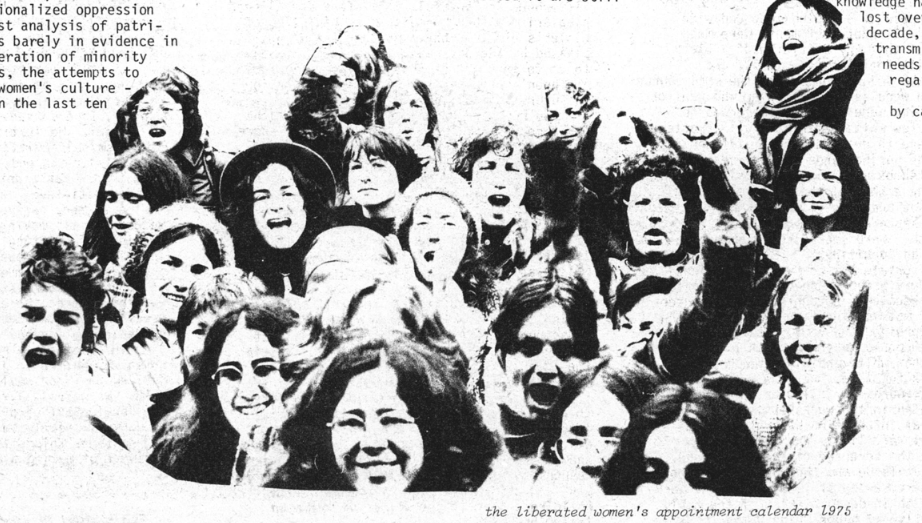
WASHINGTON’S BIGGEST MALE CHAUVINIST PIGS — THE POINTER ISSUE 1972
“Most of the women with whom I talked agreed that when it comes to male chauvinism Richard Nixon is the blue-ribbon hog.”
CORNELIA NOLAND
Noland highly critiques Nixon and other politicians in this Pointer article due to their treatment and beliefs toward women. She stated that many women compared him to a chauvinist pig–a hog that believes he is better that because he is a man. They claimed he was the #1 nominee. He had little to no respect for women, and the only times where he did was when he would advocate or enlist a woman that wasn’t sincere in her position [in the Supreme Court], therefore allowing people to believe a woman should have never been appointed in the first place. The article goes on to state many other critiques of Nixon, but all in all, his stance in supporting women was marginal, at best. He never took women seriously in their positions and constantly demeaned them. Many women agreed with Noland’s points, emphasizing that all of the politicians featured in the article would act and say similar things to Nixon about women.
All three of these articles are heavily biased in their own points of view, however they provide deeper perspective into the emotions and beliefs of women during the 1970s liberation movements and second wave feminism. There is value in their thoughts and opinions on events and political figures because they provide context into the movement. They also are direct thoughts from the authors which they wrote with passion and the desperation for more change to occur.
SOURCES:
Gaylor, Anne. 1971. “Abortion In Wisconsin?” The Pointer, 1971. https://cdm17556.contentdm.oclc.org/digital/collection/uwspseries371/id/1042/rec/21.
Koontz, Elizabeth D. 1972. “Women at the Crossroads.” The Pointer, 1972. https://cdm17556.contentdm.oclc.org/digital/collection/uwspseries371/id/1221/rec/24.
Noland, Cornelia. 1972. “Washington’s Biggest Male Chauvinist Pigs.” The Pointer, 1972. https://cdm17556.contentdm.oclc.org/digital/collection/uwspseries371/id/431/rec/26.
Leave a Reply